TLDR
- Monster Bash pinball is one of the easiest great games to recommend to new players.
- It works because the theme is instantly readable, the toys matter, and the rules are simple enough to grasp without feeling empty.
- The original 1998 Williams version is already a classic, and the Chicago Gaming remake keeps that core appeal while adding modern hardware touches.
- If you want a pinball machine that is funny, welcoming, and still satisfying after a lot of plays, Monster Bash belongs near the top of the list.
This post helps pinball players and collectors decide whether Monster Bash pinball is worth their time by explaining why the game feels so approachable, memorable, and replayable, so they can judge where it fits in a lineup or buying shortlist.
If you had about ten minutes to convince someone that pinball is worth caring about, Monster Bash pinball would be a very strong choice.
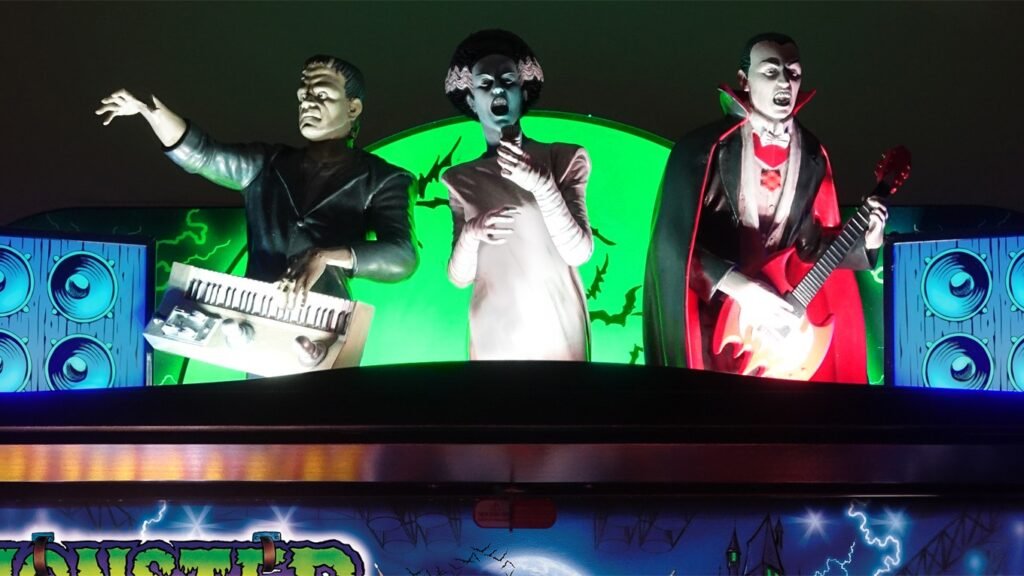
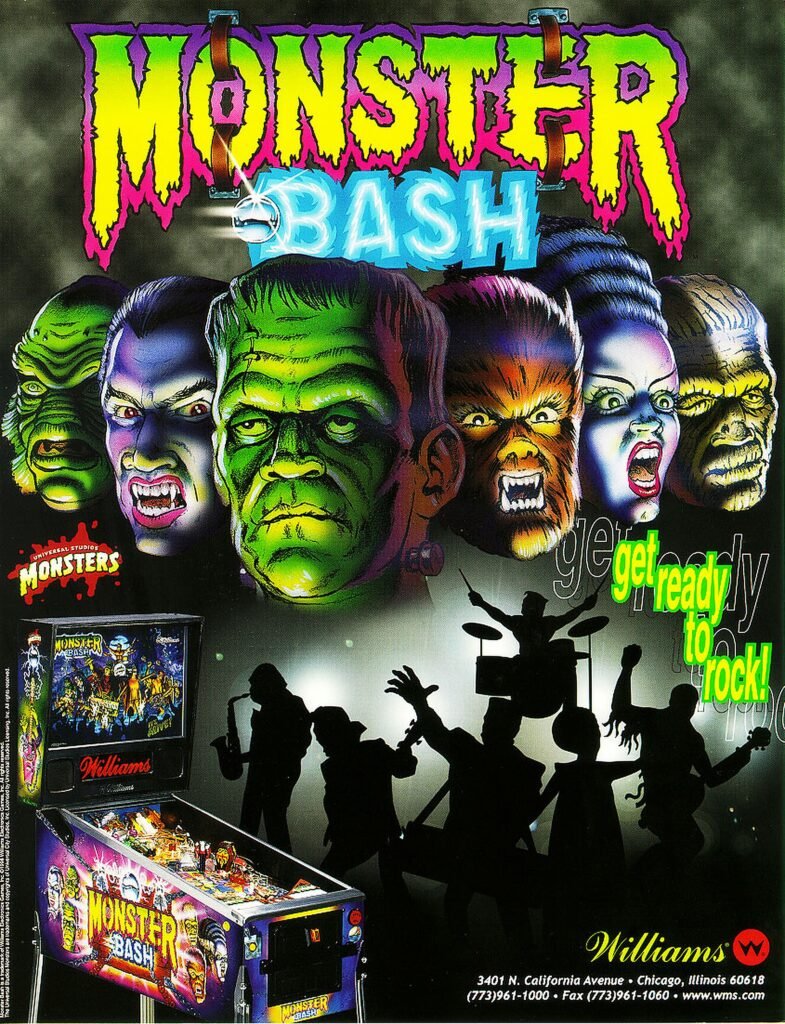
That is really the heart of this machine. It does not need a long sales pitch. You put a new player in front of it, they see Dracula, Frankenstein, the Bride, the Creature, the Mummy, and the Wolf Man, and the whole thing already makes sense. The table looks alive before the first serious rule explanation even starts. And once the ball gets moving, it backs up that first impression.
Monster Bash originally shipped from Williams in July 1998, with George Gomez on design and Lyman Sheats on software. The core idea is simple and still great: gather the monsters, collect their instruments, and build toward the big concert payoff. The Chicago Gaming remake keeps that formula intact while adding modern production updates and feature differences across editions. For a lot of players, that is exactly why the game has held up so well. It feels classic without feeling dusty.
Why Monster Bash Works So Fast
A lot of pinball machines ask you to learn their language before they start becoming fun. Monster Bash is not really like that.
The theme does a huge amount of work for the player. You are not trying to decode abstract inserts or memorize some cold rules ladder before anything clicks. You are getting a monster band back together. That is funny, clear, and immediately playable. Even people who know almost nothing about pinball can understand that goal.
That clarity matters more than people sometimes admit. A machine can have brilliant code and still lose casual players in the first few minutes. Monster Bash does the opposite. It welcomes you in. The callouts are goofy in the right way, the theme is broad without feeling bland, and the game constantly gives you visual feedback that something is happening. That makes it one of the rare titles that can work for a collector, a family game room, and a guest who just wandered up and said, “Sure, I’ll try one game.”
A Packed Playfield That Still Feels Readable
One of the best things about Monster Bash is that the playfield looks loaded, but not messy.
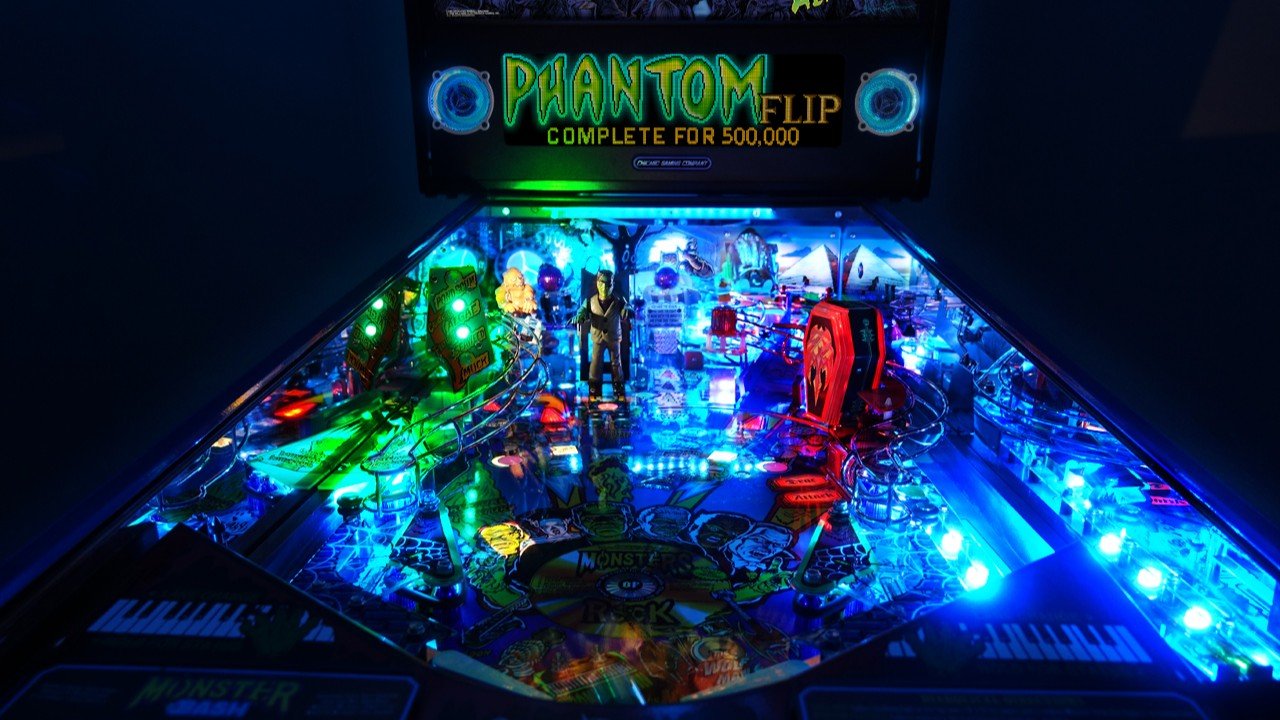
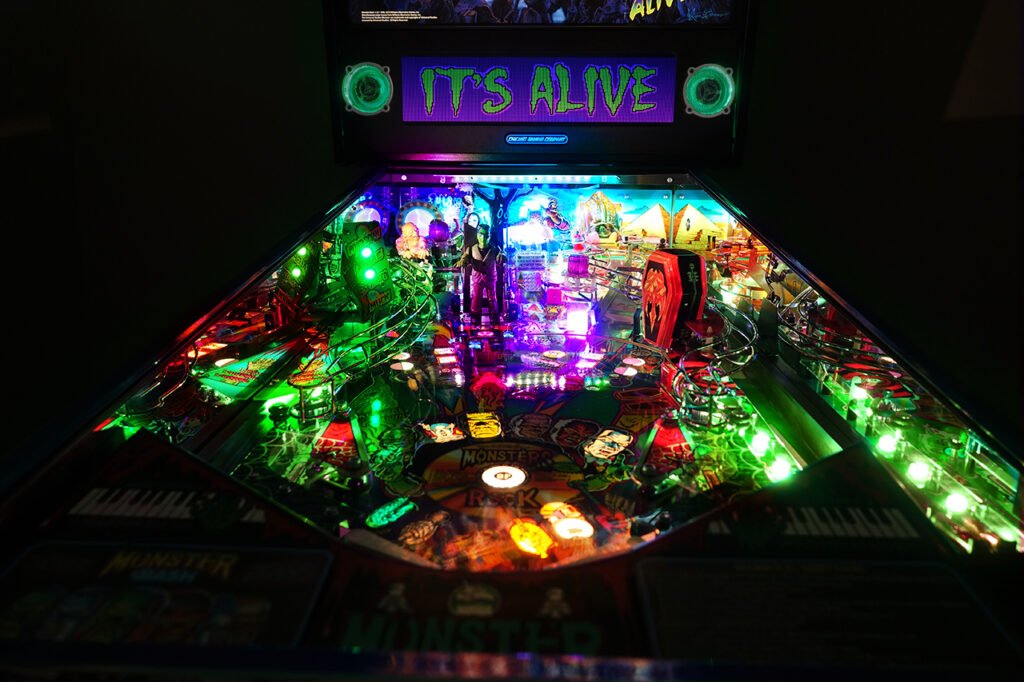
There is a real difference between a game being full and a game being cluttered. Monster Bash lands on the right side of that line. The layout gives you ramps, orbits, an inner loop, scoop and saucer shots, bash toys, bumpers, and mode-building shots, but it still feels like you can read the table. You are not staring at it wondering where the action is supposed to happen.
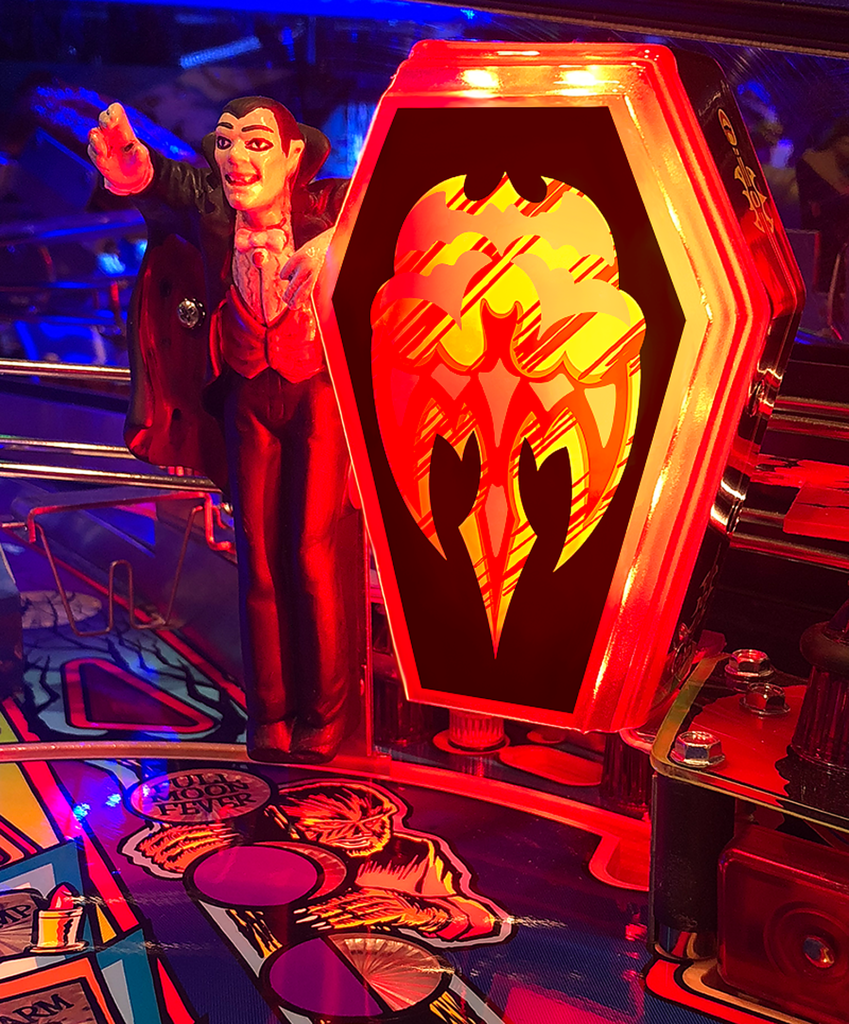
That also helps explain why people talk about the toys so much. On some machines, toys are mostly decoration. Here, they feel connected to play. Frankenstein is not just sitting there looking dramatic. Bashing him changes the game state and opens the ramp behind him. Dracula’s coffin matters. The Creature matters. The whole table sells the idea that the monsters are part of the action, not just something bolted on afterward.
From a gameplay standpoint, Monster Bash uses a familiar fan-style layout with two flippers, three ramps, two orbits, an inner loop, and a central grouping of major objectives. Modern rules guides still describe it as a table where no single shot is especially brutal, but where you want to move around the whole playfield rather than camp one safe option. That balance is a big part of why it feels so good. You are encouraged to explore, and the table usually rewards that instinct.
The Rules Are Straightforward, but Not Empty
This is where Monster Bash pinball really earns its reputation.
The basic objective is easy to explain. You are trying to collect the six monsters’ instruments and move toward the big concert modes. In rules terms, the game is built around playing and completing monster-related objectives, lighting Monster Bash, and then pushing further into Monsters of Rock. That is enough structure to create momentum, but not so much complexity that a newer player feels locked out.
And that is the sweet spot.
Some games are so simple that they flatten out after the novelty wears off. Others are so layered that they can feel like homework until you put in serious time. Monster Bash sits in a very comfortable middle. You can enjoy it casually, but there is still enough scoring and mode-stacking decision-making to keep better players engaged.
I also think the machine benefits from how naturally the progression comes across. The monsters are the rules. The band-building concept is the mode ladder. The wizard-style payoff fits the theme. Nothing feels pasted on. Even people who never read a rulesheet can usually tell that they are working toward something.
That kind of coherence is rare. It is one reason Monster Bash has such broad appeal, and it is one reason owners and reviewers keep describing it as approachable, fun, and easy to share with other people.
Why The CGC Remake Gets So Much Love
The Chicago Gaming remake matters because it did not try to “fix” Monster Bash by turning it into a different game.
Instead, it largely kept the original identity in place and layered in modern manufacturing, lighting, sound, and display upgrades depending on the edition. Chicago Gaming’s own feature list highlights modern electronics, LED lighting, three remake models, and bigger display and audio options on the upper trims. In other words, the remake respects what people already loved while making the package feel more current.
That approach makes sense for this title. Monster Bash was never a machine that needed its soul replaced. It needed to preserve the humor, flow, and monster-band personality while giving today’s players a cleaner, more reliable path to that experience.
For many home players, that is a very appealing pitch. You get a classic design with stronger modern presentation. And because Monster Bash leans so hard on mood, callouts, and visual spectacle, those remake improvements can genuinely add to the experience rather than just sitting on a spec sheet.
Where Monster Bash Fits in a Collection
Monster Bash is not the game I would point to if someone said they only care about brutal difficulty, ultra-deep modern rules, or long competitive optimization sessions. It can support skilled play, but that is not the main reason people fall in love with it.
This is the machine you buy or seek out because it makes people want to play another game.
It is especially good for home collections with mixed skill levels. It is good for players who care about theme execution. It is good for people who want strong toys without sacrificing flow. And it is very good for that moment when a friend or family member says, “Okay, show me one pinball machine that explains why you like this hobby so much.”
That does not mean it is shallow. It means it is generous. There is a difference.
If you want a machine that greets people with personality, rewards them quickly, and still has enough structure to stay interesting, Monster Bash has a real case. And if you already like Williams-style late-90s design, its status makes even more sense. The layout DNA, the shot architecture, and the play rhythm all come from a very good era of pinball, but the theme makes it softer around the edges in a good way.
Final Thoughts
Monster Bash pinball is one of those games that becomes easier to respect the more you think about what it is actually doing.
It is funny without turning into a joke machine. It is approachable without becoming boring. It is packed with toys, but those toys are tied to play. It has a clear objective, but it still feels like a real pinball game instead of a guided tour. And whether you are talking about the original Williams release or the CGC remake, the core appeal stays the same.
I would not call many games automatic recommendations. Monster Bash is close.
If someone asked me for a pinball machine that captures theme, flow, readability, and replay value in one package, this would be one of the first names out of my mouth.
FAQs
Is Monster Bash Pinball Good for Beginners?
Yes. Monster Bash is one of the better beginner-friendly classics because the objective is clear, the theme is easy to read, and the shots generally feel learnable without being bland.
What Is the Main Goal in Monster Bash?
The core goal is to collect the six monsters’ instruments by playing and completing their objectives, then build toward Monster Bash and eventually Monsters of Rock.
Is the CGC Remake Different From the Original?
The core game is still the same design, but the remake adds modern production elements such as updated electronics, lighting, and edition-specific display and audio upgrades.
Is Monster Bash a Deep Rules Game?
It is not usually the first machine people cite for modern-depth rules complexity, but it is deeper than it first appears because of its progression, stacking, and multiball structure. Its real strength is how cleanly it teaches itself.
Why Do So Many Players Rank Monster Bash So Highly?
Because it combines a strong theme, memorable callouts, interactive toys, welcoming shot layout, and a ruleset that is easy to learn but still rewarding to play well.