TLDR
- Pinball survived because it kept changing at the exact moments when staying the same would have killed it.
- The game started as bagatelle, then became a coin-op hit during the Depression, but early versions looked enough like gambling that cities cracked down on it.
- Flippers changed pinball from something you mostly watched into something you could visibly control.
- Solid-state electronics made games deeper, but video games nearly crushed the business anyway.
- Modern pinball is still here because it found new homes in houses, offices, bars, tournaments, and connected online features.
Pinball used to be called dangerous, corrupting, and a nickel-stealer. That sounds absurd now. But it tells you something important right away. The history of pinball is not a smooth nostalgia story. It is a survival story.
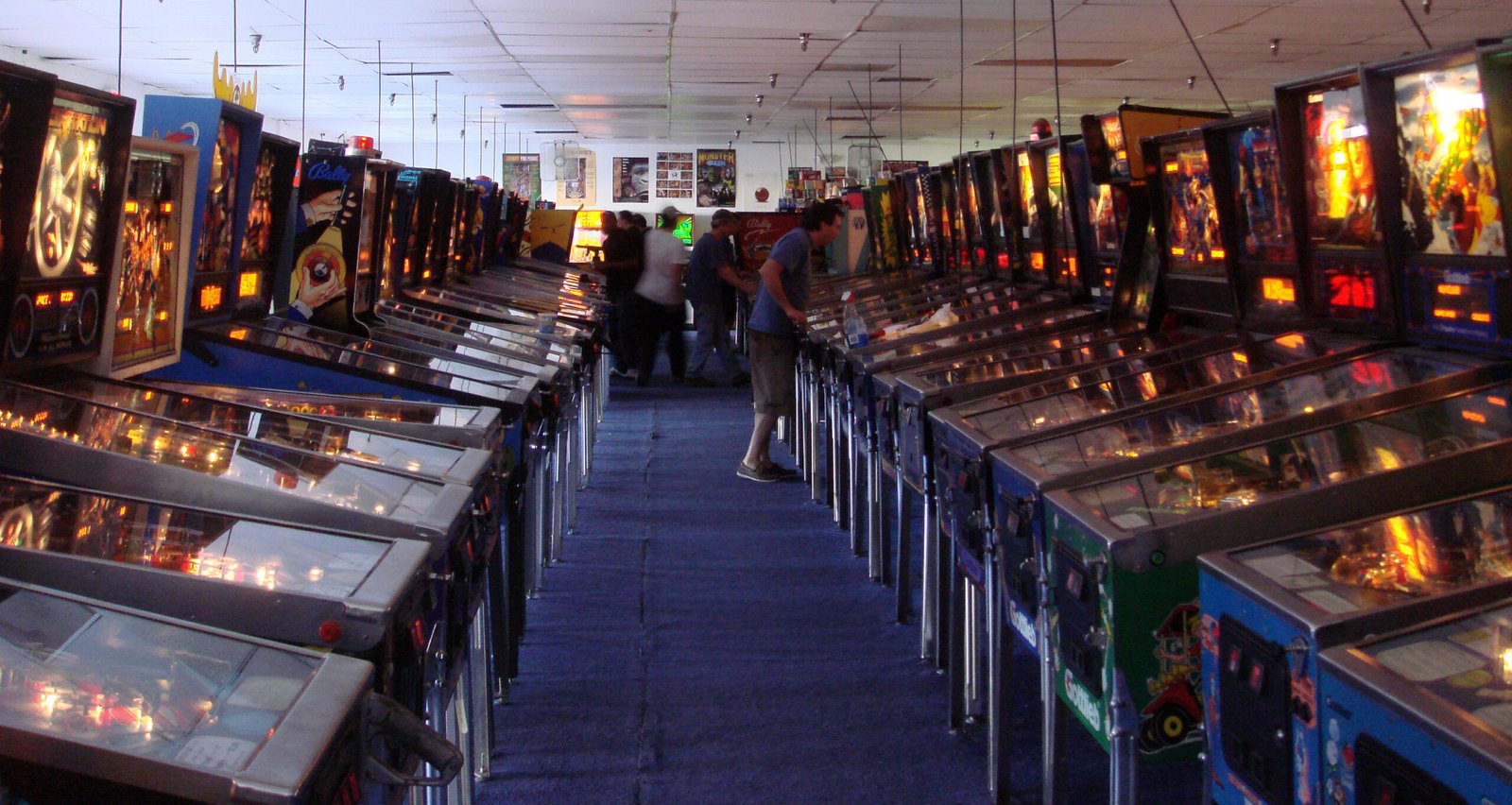
If you only know pinball as the loud machine in the corner of a barcade, or the expensive thing someone wants in a basement game room, you miss the bigger point. Pinball has survived bans, moral panic, collapsing manufacturers, the rise of video games, and changing player tastes. It is still here because it protected the one part that matters most, the live physical conversation between your hands, the flippers, and the ball, while changing almost everything around it.
Pinball Started as Bagatelle, Not the Machine We Know Now
The ancestor of pinball was bagatelle, a tabletop game that looked more like a cousin of billiards than a modern arcade machine. Players sent a ball up a small board and let gravity, pegs, and pockets do the rest. That basic structure matters because it explains both where pinball came from and why lawmakers later got suspicious of it.
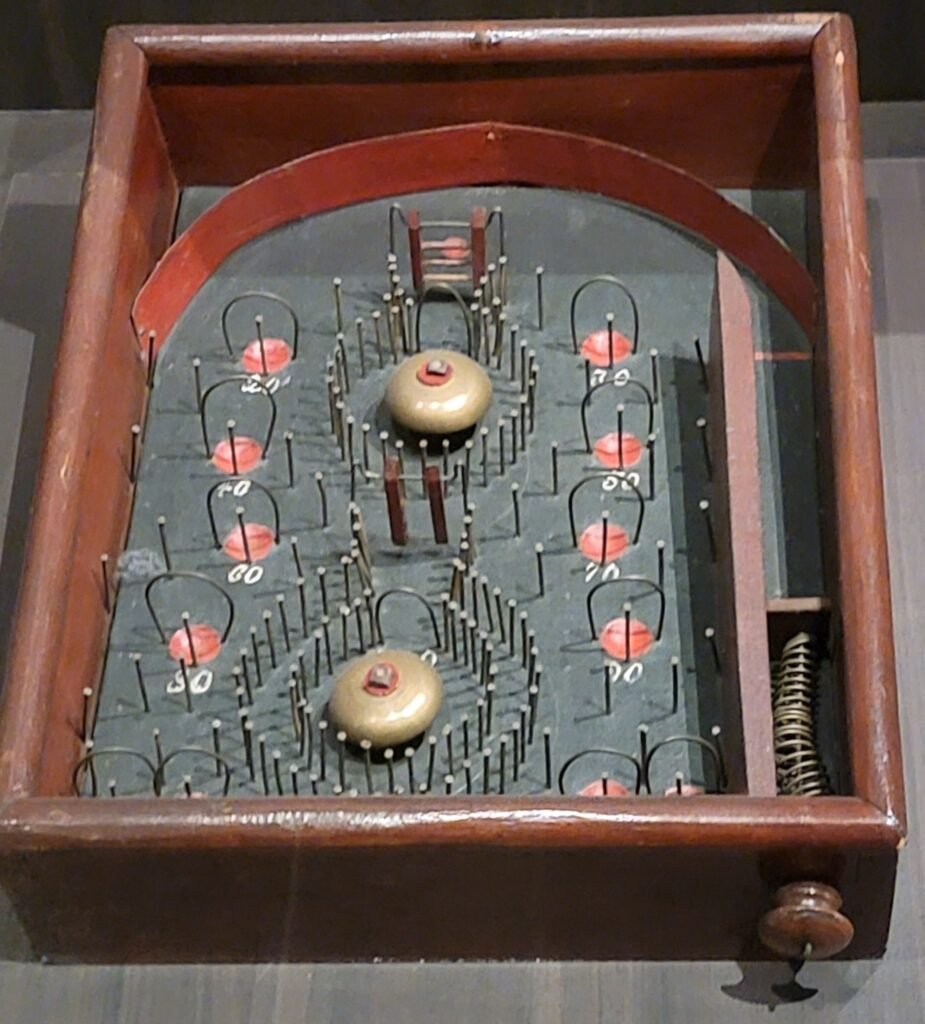
One of the biggest steps forward came in 1871, when Montague Redgrave patented an improved bagatelle design with a spring-loaded plunger and a steeper incline. That sounds like a small tweak. It was not. That plunger is one of the clearest bridges between old bagatelle and modern pinball. Suddenly the launch had more consistency, more repeatability, and more of a recognizable skill element.
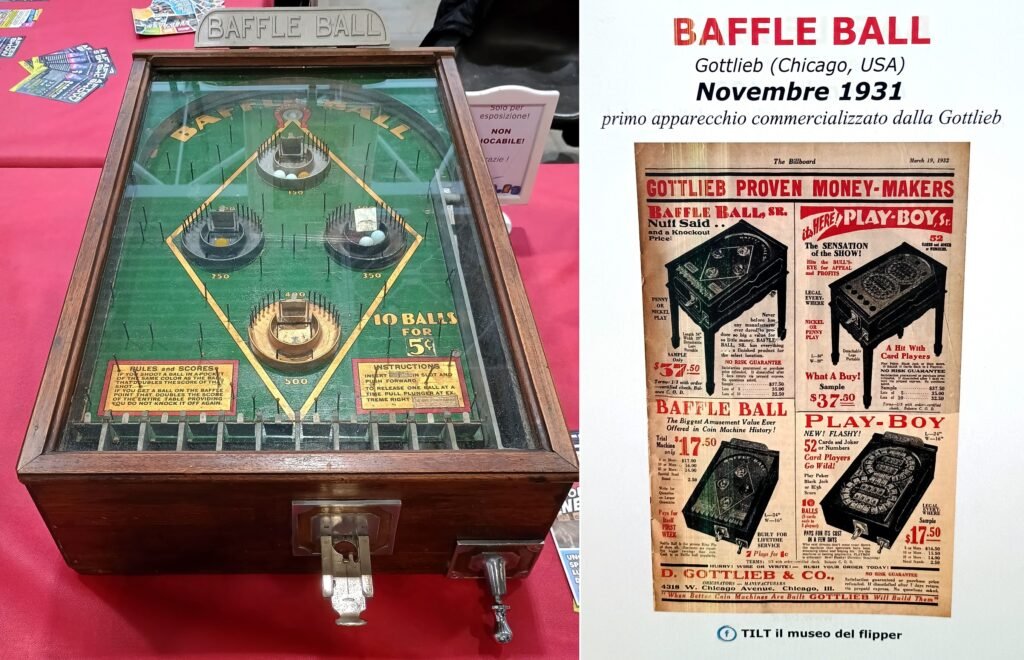
By about 1930, pinball started taking on its modern commercial form. Coin slots showed up. The machines spread quickly. Great Depression players wanted cheap entertainment, and operators wanted something small, understandable, and good at collecting nickels. Gottlieb’s Baffle Ball became one of the early breakout hits, with roughly 50,000 units sold. That is a huge number for an early coin-op game, and it helps explain why pinball exploded so fast.
But early pinball was not modern pinball. No flippers. Limited control once the ball was in motion. A lot more hoping than aiming. That is important, because the more the game looked like chance after the plunge, the easier it was for critics to frame it as gambling with better lighting.
The Ban Era Was About Gambling, Politics, and Optics
This is where the story gets more dramatic than most people expect. Pinball was not just unpopular in some places. It was illegal.
Pre-flipper pinball sat in a bad spot. It was cheap, coin-operated, and often connected to cash payouts or gambling-adjacent habits. That made it an easy target. In New York City, Mayor Fiorello LaGuardia treated pinball as a social problem, arguing that it pulled money from kids and fed criminal activity. Once the game got that reputation, facts almost stopped mattering. It was no longer just a pastime. It was a symbol.
World War II made the optics even worse. Metals used in machines could be framed as wasteful during wartime, and that gave the crackdown a patriotic gloss. So the ban story was not only about whether pinball was a game of skill or chance. It was also about who got to define the machine in public. Was it amusement hardware, or was it a vice machine wearing a friendlier face?
For a while, the bad definition won.
That first near-death moment is easy to underestimate now. Pinball did not survive just because people liked it. It survived because the game eventually gave players and defenders a much stronger argument. And that argument was control.
Flippers Changed Everything, but Roger Sharpe Finished the Job
If you want a clean dividing line in pinball history, 1947 is a strong candidate. Gottlieb’s Humpty Dumpty introduced player-controlled flippers, and from that point forward the game had a very different identity.
Flippers changed pinball from a mostly reactive experience into an active one. Now you could save a ball, redirect it, aim for a lane, repeat a shot, and recover from trouble. You were no longer just paying for suspense under glass. You were playing. Modern pinball really starts here.
But mechanical progress and legal acceptance are not the same thing. Even after flippers made the game more visibly skill-based, some city bans stayed in place for decades.
That is where Roger Sharpe enters the story. In 1976, during a hearing on New York City’s ban, he demonstrated pinball on a Gottlieb Bank Shot machine and famously called his shot before making it. That moment mattered far beyond the room. It gave the game a public, memorable proof of skill. Not a theory. Not a white paper. A live shot, made on command.
The repeal of New York’s ban did not magically solve everything, but it did help pinball step out of the old “mechanical bandit” framing. It is hard to keep calling something pure chance when a player just showed you he can intentionally do what he says he is about to do.
That was one of pinball’s smartest survival turns. The game did not just become better. It became easier to defend.
Solid-State Pinball Made Games Deeper, Then Video Games Changed the Market
Once flippers made pinball feel more skill-based, electronics made it deeper.
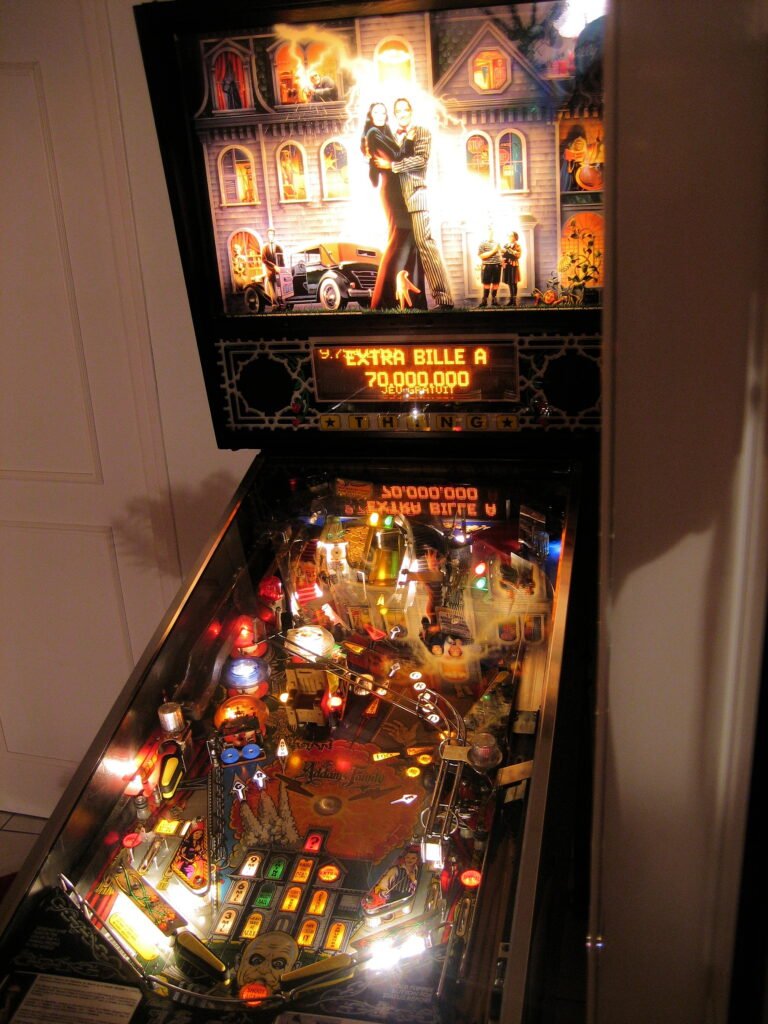
Solid-state pinball in the late 1970s changed the experience in a big way. Electronic displays replaced older scoring systems. Sound got more dynamic. Games could remember more. Rules could branch. Multiple players could have more distinct experiences. Pinball started moving from “shoot and react” toward something closer to progression, objectives, and layered scoring.
This is one reason old and new machines can feel like different hobbies. A simpler older machine often asks for control, nudging judgment, and repeatable shooting. A modern machine might ask for route planning, mode selection, stack timing, and long-term scoring strategy. Both can be great. But they scratch different parts of the brain.
Then came video games.
And this was pinball’s second real near-death moment.
Video games were easier for operators in some obvious ways. They took up less space relative to what they offered. They were easier to refresh. Players saw them as newer. Pinball adapted by getting flashier and smarter, but the pressure was real. By the end of the 1990s, the business had been hit so hard that WMS left pinball in 1999, and Stern kept commercial production alive when the market looked brutally thin.
What makes this period interesting is that pinball was not failing because it had no great games. It absolutely did. The Addams Family, released in 1992, is still the best-selling pinball machine ever. The problem was broader than any one title. The business model, maintenance burden, and arcade market had shifted under the game.
That is a hard lesson, and a useful one. A format can still produce hits and be in danger at the same time.
The Modern Comeback Is About Homes, Connected Features, and Community
A lot of people tell the comeback story too simply. They say pinball came back because older fans got nostalgic. Nostalgia helped, sure. But that is not enough on its own. Plenty of old things have nostalgia and still disappear.
Modern pinball survived because it found better places to live.
Homes became more important. So did office lounges, retail spaces, breweries, barcades, enthusiast venues, and tournament locations. That shift matters because pinball works unusually well as a room-changing object. It is playable, visual, noisy, social, and self-explaining in a way many entertainment products are not. People walk over. They try one game. Then another. They start talking.
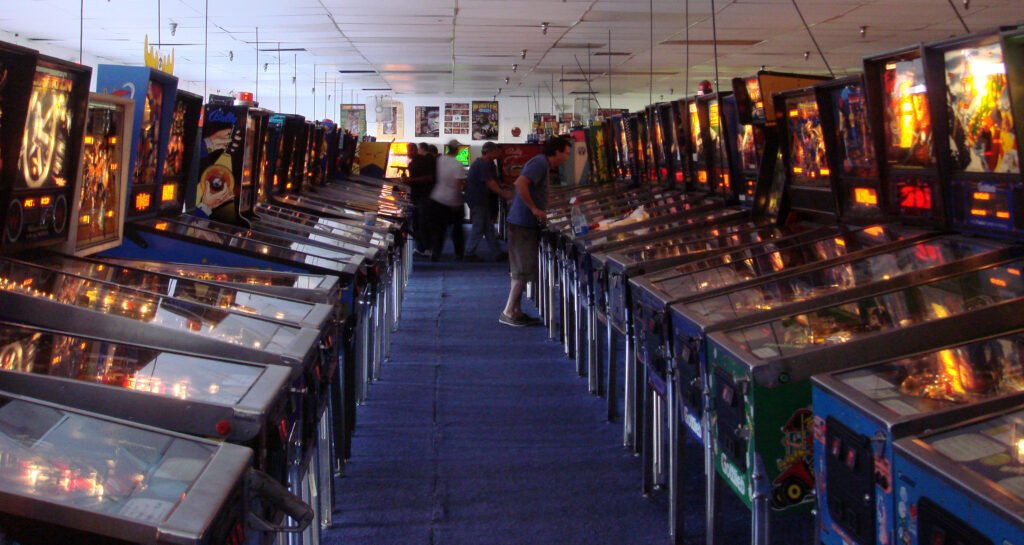
That is also why pinball rentals make sense in the first place. Rock Custom Pinball’s own homepage gets this exactly right: a good machine becomes part of the room instead of just occupying space. In a home game room, office, retail setting, or private event, that is a real advantage.
The machines themselves also changed. Modern Stern games use Insider Connected for achievements, leaderboards, badges, stats tracking, home machine registration, and ongoing code updates. That last part is easy to miss if you think of pinball as frozen hardware. A modern game can keep improving after it ships, which makes it feel much closer to a live platform than an old sealed appliance.
The community side is stronger too. The IFPA reported 42,936 unique players in sanctioned events during 2025. That is not just a tiny nostalgia club refusing to log off. That is a real competitive ecosystem. And on the manufacturing side, the current scene is broader than a one-company rescue act. Texas Pinball Festival’s 2026 lineup highlighted major names including Stern, Jersey Jack, Spooky, American Pinball, Chicago Gaming, Pinball Brothers, Dutch Pinball, Barrels of Fun, and Multimorphic.
That kind of variety matters. A hobby is healthier when it has more than one lane into it.
What the History of Pinball Really Tells Us
The history of pinball tells us that the game survives best when it remembers what cannot be replaced and stays flexible about everything else.
The irreplaceable part is the physical argument under glass. You flip. The ball reacts. You recover, or you do not. Everyone nearby can understand the emotional arc of the moment even if they do not know the rule set. That is one of pinball’s secret weapons. It is deep for the player and readable for the spectator.
Everything else has been negotiable.
Cabinet art changed. Themes changed. Scoring changed. electronics changed. Rules changed. The business model changed. The venues changed. The player base widened. The online layer got added. And through all of that, pinball still feels like pinball because the essential experience never disappeared.
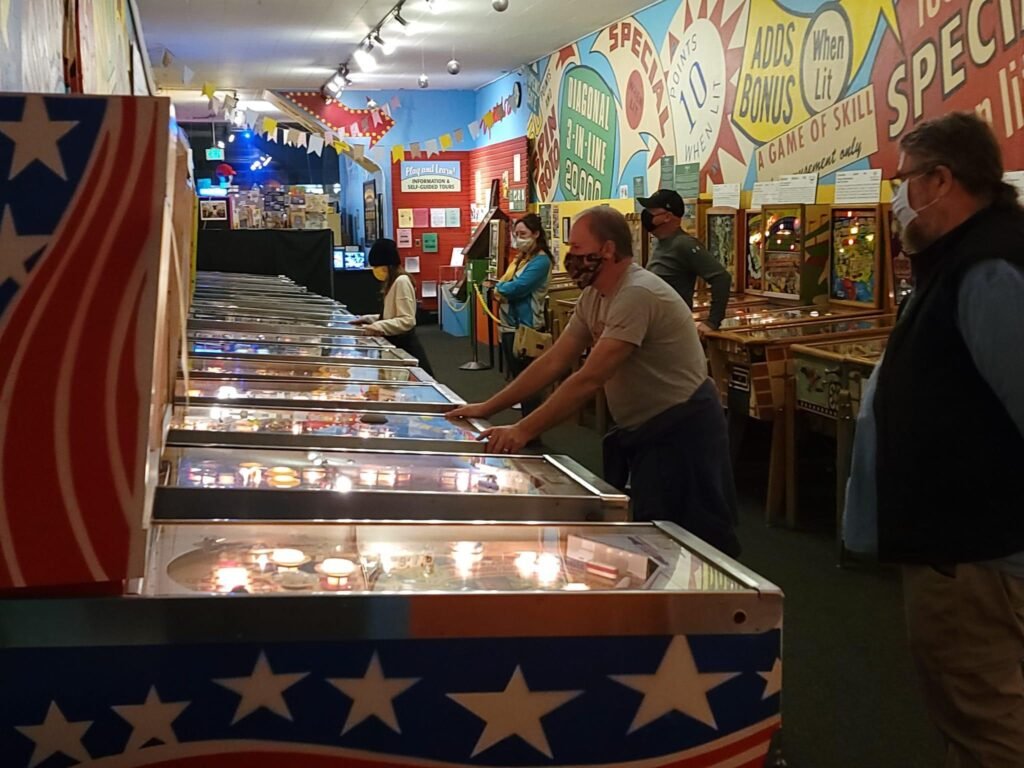
Some players still prefer older electromechanical or early solid-state games, and that is fair. They can feel cleaner, less scripted, and easier to read. But modern games have their own advantage. They can stay interesting for a very long time. That deeper code, those stacked objectives, and those updateable rule sets are not a betrayal of pinball. They are one of the reasons pinball is still standing.
Conclusion
Pinball did not survive by staying pure. It survived by adapting at exactly the moments adaptation became necessary.
It started as bagatelle, became a Depression-era coin-op craze, got treated like a public menace, then rebuilt its identity around skill. It got smarter with solid-state electronics, got hammered by video games, nearly lost the commercial war, then found new life in homes, tournaments, specialty venues, and connected modern machines.
That is why pinball is still here.
Not because it stayed frozen in amber. Because it kept changing while protecting the one thing it could not afford to lose: that live, physical, slightly tense feeling that the next shot might make you look like a genius or send the ball screaming straight down the middle.
FAQs
What Is the Oldest Form of Pinball?
The oldest direct ancestor is bagatelle, a tabletop ball-and-peg game that predates coin-op pinball by a long stretch. Modern pinball did not really emerge until later versions added the plunger, incline, and eventually coin operation and flippers.
Was Pinball Really Illegal?
Yes. Several cities banned it, and New York City’s ban is the most famous example. The issue was not just that officials disliked the game. Early pinball looked too close to gambling, especially before flippers made player skill much easier to see.
What Made Pinball Feel Like a Skill Game?
Flippers were the big turning point. Once players could save, aim, and repeat shots, pinball became much easier to defend as a game of skill. Roger Sharpe’s 1976 demonstration in New York helped make that visible in a public way.
Did Video Games Almost Kill Pinball?
Yes, or close enough that the distinction does not matter much. Video games changed what operators and players expected, and the late 1990s were especially rough. Stern kept commercial pinball alive through a period when the market looked thin and unstable.
Why Do Modern Pinball Machines Feel More Complicated?
Because they usually are. Solid-state electronics and modern software made longer rulesets, multi-stage objectives, stacking strategies, callouts, and connected features possible. Older games often feel cleaner and simpler. Newer games usually trade that simplicity for depth and replay value.
Is Pinball Actually Growing Again?
In important ways, yes. Competitive play is active, modern manufacturers are still releasing new titles, and the game now lives in more places than the classic arcade alone. Homes, offices, barcades, festivals, leagues, and event spaces all help keep the hobby moving.