TLDR
What happened to Gottlieb? A company that helped define modern pinball eventually lost its edge when the industry moved from electromechanical games to solid-state electronics and corporate ownership kept shifting. But Gottlieb did not disappear overnight. The manufacturing side carried on through Mylstar and then Premier until 1996, and the machines still matter because so much of pinball history runs straight through them.
This post helps pinball fans understand what happened to Gottlieb by explaining how the company helped build modern pinball, why it lost ground, and why the name still matters, so they can place classic Gottlieb machines in the right historical context.
One of the strangest things about pinball history is that some of its most important names are no longer manufacturers at all. Gottlieb is the perfect example. If you are asking what happened to Gottlieb, the short answer is that the company helped create modern pinball, ruled huge stretches of the electromechanical era, struggled when the market turned hard toward solid-state systems, and ultimately stopped manufacturing in 1996. The name survived. The factory life did not.
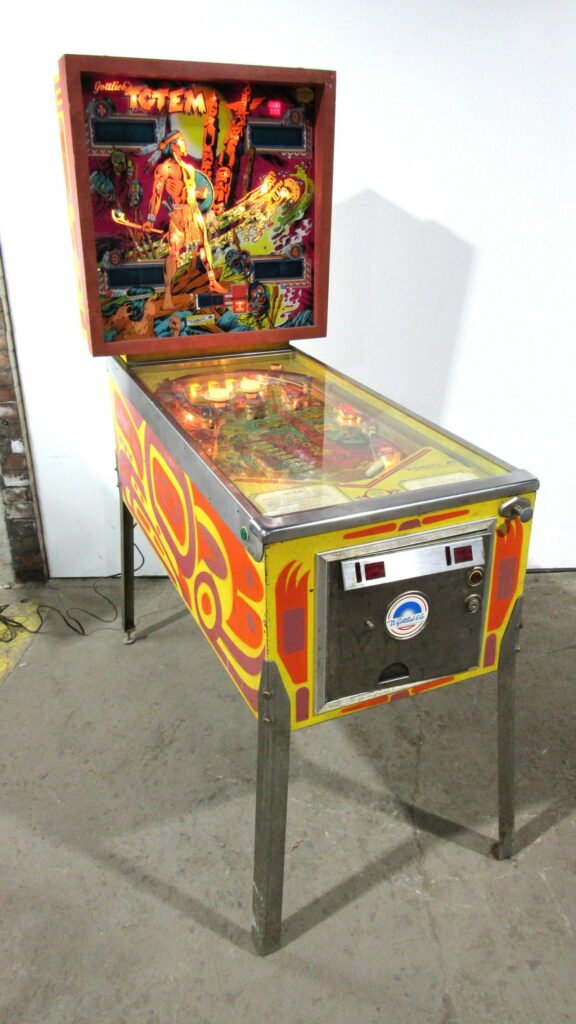
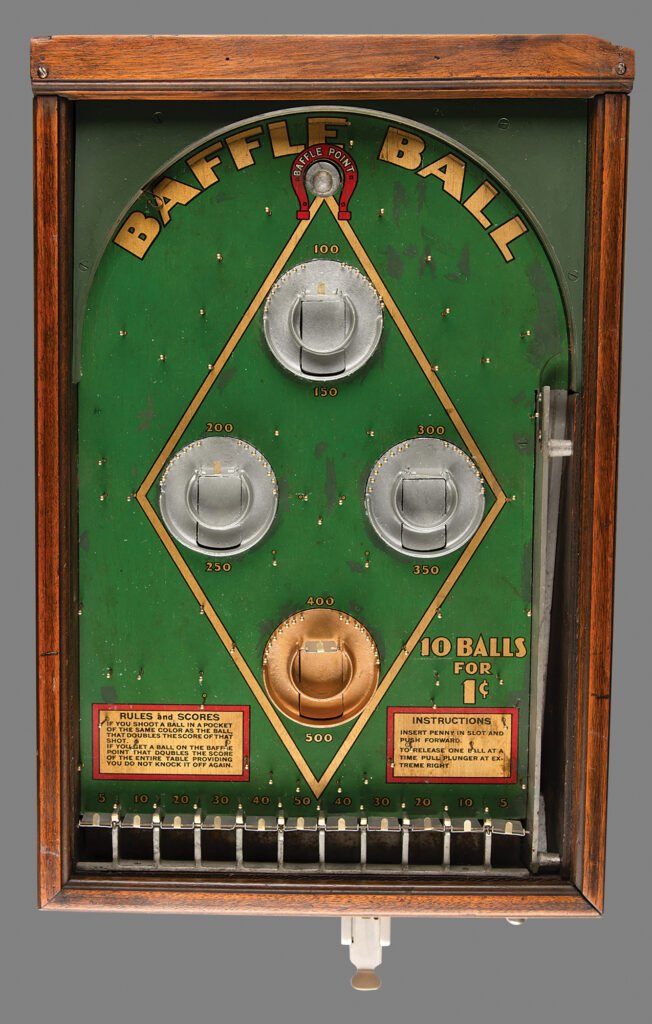
That is why the story still lands. This was not some minor footnote brand. David Gottlieb established the company in 1927. Baffle Ball became a mass-produced national hit in 1931. Humpty Dumpty brought flippers to commercial pinball in 1947. For years after that, Gottlieb was one of the companies shaping what players, operators, and collectors thought pinball was supposed to be.
Gottlieb Helped Build Modern Pinball
If you strip the story down to its essentials, Gottlieb matters because it sits at two huge turning points. The first is Baffle Ball. A 1987 Play Meter history piece describes Baffle Ball as the first pinball machine to be mass produced and mass marketed. That is not a tiny detail. It is the kind of change that turns a novelty into a real business.
The second turning point is even bigger. Gottlieb’s own official history says the company was the first to put flippers on the playfield in 1947, and Chicago Magazine’s history of the game points to Harry Mabs’s flipper innovation as the moment players gained real control over the ball. On Humpty Dumpty, that meant six flippers and a new relationship between player and machine. Modern pinball did not fully exist before that shift.
That change also mattered outside the cabinet. Before flippers, pinball had a much stronger reputation as a chance-driven gambling device. History.com notes that New York City banned pinball in 1942, partly because the game was seen as a moral and criminal nuisance, and that the ban was only overturned in 1976 after Roger Sharpe demonstrated the game’s skill element to the city council. In other words, the road from “gambling machine” to “skill game” runs right through the kind of player control Gottlieb helped popularize.
Why Gottlieb Owned So Much of the EM Era
Gottlieb’s official history says the brand was known as the “Cadillac of pinball” in the 1960s and 1970s. Chicago Magazine uses that exact phrase too. That reputation did not come from a single gimmick or one famous title. It came from years of being a standard-setter in build feel, art, and operator confidence. When people talk about classic Chicago pinball, Gottlieb is one of the first names they mean.
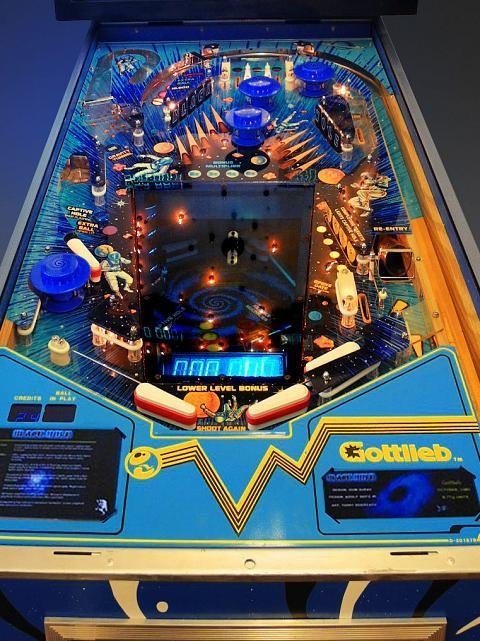
And the catalog backs that up. Spirit of 76 from 1975 is one of those late EM games that still feels like a direct line to the old-school bar and arcade era. Black Hole from 1981 shows Gottlieb pushing spectacle with its infinity-light backglass and ambitious presentation. Haunted House from 1982 went even further and became the first game with three playfields the ball could move between, including one below the main surface. These are very different machines, but they all show the same thing: Gottlieb was not just surviving. It was shaping eras.
There is also a nice little legacy detail here. Gottlieb’s official site notes that in many countries, pinball machines are still called “flippers.” That is the kind of influence very few manufacturers ever get. Even the language of the hobby kept a trace of Gottlieb in it.
Where Things Started Going Wrong
This is the part of the story that gets oversimplified a lot. Some retellings make it sound like Gottlieb’s big electronic pivot arrived in the mid-1970s and then everything collapsed. But Gottlieb’s own Spirit of 76 was still an electromechanical game. The real solid-state transition came later. Pinrepair’s technical history says Gottlieb System 1 was introduced in late 1977, and Pinside lists Cleopatra, released in December 1977, as a System 1 solid-state machine. So the cleaner version is this: Gottlieb was late to solid state, not early.
That lag mattered because the transition was not just about swapping score reels for digital displays. Pinrepair’s breakdown of System 1 explains that Gottlieb stayed closer to electromechanical thinking than its main competitors, kept certain devices outside full solid-state control, used an oddball architecture, and wound up with service issues that frustrated operators. In plain terms, Gottlieb did not just arrive late. It arrived with a system that was harder to live with.
And that is really the heart of what happened to Gottlieb. The company’s old strengths were real. They just mapped badly onto the next era. Being the king of EM pinball did not automatically make you the king of solid-state pinball. Bally and Williams adapted faster. Gottlieb still made interesting games, but it no longer had the same clean advantage.
Columbia, Mylstar, and the Q*bert Detour
Corporate ownership did not make the transition easier. Gottlieb’s official history says Columbia Pictures Industries acquired D. Gottlieb & Co. in 1977. Then, after Coca-Cola acquired Columbia, the pinball assets were moved to Mylstar Electronics in 1983. That period was short, and it split the identity of the company in a way that still confuses people looking back.
This was also the era when Gottlieb touched arcade video games in a bigger way. The company’s name is attached to Q*bert in 1982, one of the most memorable arcade games of that period. But that success did not solve the bigger structural issue on the pinball side. The business was moving, the corporate parent was changing, and pinball itself was becoming a tougher market.
The important correction is this: Gottlieb did not simply vanish in the early 1980s. In October 1984, Premier Technology purchased Mylstar’s pinball assets. Official Gottlieb history says Premier then continued making coin-operated pinball machines under the Gottlieb trademark until 1996. So the manufacturing line kept going, even though the original company structure was gone.
And Premier was not just a paper shell. The same official history says Premier had a Bensenville, Illinois factory, a West Fargo, North Dakota factory, and peak early-1990s annual sales above $30 million. So this was a real operating business, not just a trademark on life support. It is more accurate to say Gottlieb’s center of gravity shifted and weakened over time than to say it simply disappeared all at once.
The End of Manufacturing, Not the End of the Name
Premier Technology closed in the summer of 1996, according to the official Gottlieb history. Pinside lists Barb Wire as an April 1996 Gottlieb release with 1,000 units produced, and that is why it is widely treated as the last production Gottlieb pinball machine. It is a fittingly odd final chapter. Not a grand farewell. Not a nostalgic curtain call. Just one last 1990s System 3 game before the manufacturing story ended.
But the brand itself did not vanish. Gottlieb Development LLC’s current site says it owns the Gottlieb, D. Gottlieb & Co., and Premier trademarks and licenses them for products and related uses. So if you are asking what happened to Gottlieb, the exact answer is this: the manufacturer died, the trademark survived, and the machines outlived both.
Why Gottlieb Still Matters to Players and Collectors
Gottlieb’s official history says more than 600 different Gottlieb pinball or pinball-type games were produced, and that collectors still hold examples of virtually all models. That is a big reason the company feels more alive in the hobby than its manufacturing timeline would suggest. You do not need a living factory when the games themselves are still in basements, collections, shows, repair shops, and commercial locations.
If you are looking at Gottlieb machines today, this is the simplest way I think about them:
- EM Gottlieb is where you go for classic rhythm, straightforward rules, and that old Chicago feel. Spirit of 76 is a good reference point.
- Early Solid-State Gottlieb is historically important, but often part of the “late transition” story. Cleopatra is one of the clearest markers.
- System 80 Gottlieb is where the company got ambitious and pleasantly strange. Black Hole and Haunted House are the headliners most people know first.
- System 3 Gottlieb is where you find some underrated 1990s value and a lot of personality. Cue Ball Wizard, Cactus Jack’s, and Barb Wire all come up for good reason.
That is the lasting point. Gottlieb is not just a company that failed. It is one of the clearest ways to see the whole shape of pinball history at once: coin-op origins, the flipper revolution, EM dominance, the solid-state scramble, corporate reshuffling, and then a collector afterlife strong enough to keep the name in circulation anyway.
Conclusion
What happened to Gottlieb was not one bad launch, one bad owner, or one bad year. It was a slower mismatch between a company built for one kind of pinball economy and a market that kept changing underneath it. That is why the story feels bigger than a normal brand obituary. Gottlieb helped make modern pinball possible, then got caught on the wrong side of the next major turn.
And yet the legacy is still easy to find. You find it in Baffle Ball. You find it in Humpty Dumpty. You find it in Spirit of 76, Black Hole, Haunted House, Cue Ball Wizard, and even Barb Wire. The company is gone as a manufacturer, but the history never really left the room. That is why Gottlieb still matters.
FAQs
Did Gottlieb Invent Pinball?
Not exactly. Pinball evolved out of earlier bagatelle and marble-game forms. But Gottlieb’s Baffle Ball was one of the first huge commercial breakthroughs, and Humpty Dumpty helped define what modern pinball became by introducing flippers to a commercial game.
What Was Gottlieb’s Biggest Innovation?
For most people, it is the flipper. Gottlieb’s official history says the company was the first to incorporate flippers on the playfield in 1947, and Pinside lists Humpty Dumpty from October 1947 with six flippers. That innovation changed pinball from something closer to guided chance into a much more skill-driven game.
Was Spirit of 76 Gottlieb’s First Solid-State Game?
No. Spirit of 76 was an electromechanical 1975 game. Gottlieb’s real solid-state move started with System 1 in late 1977, and Cleopatra is one of the first System 1 examples.
Is Gottlieb Still Making Pinball Machines?
No. Manufacturing ended in 1996 under Premier Technology. The Gottlieb name and related marks still exist, but today they live through ownership and licensing rather than through a revived pinball factory.
Which Gottlieb Games Matter Most if I Want to Understand the Brand?
A very solid starter list is Baffle Ball, Humpty Dumpty, Spirit of 76, Black Hole, Haunted House, Cue Ball Wizard, and Barb Wire. That run shows you the company’s early commercial breakout, its biggest design breakthrough, its EM identity, its ambitious 1980s weirdness, its 1990s System 3 personality, and its last production chapter.