
TLDR
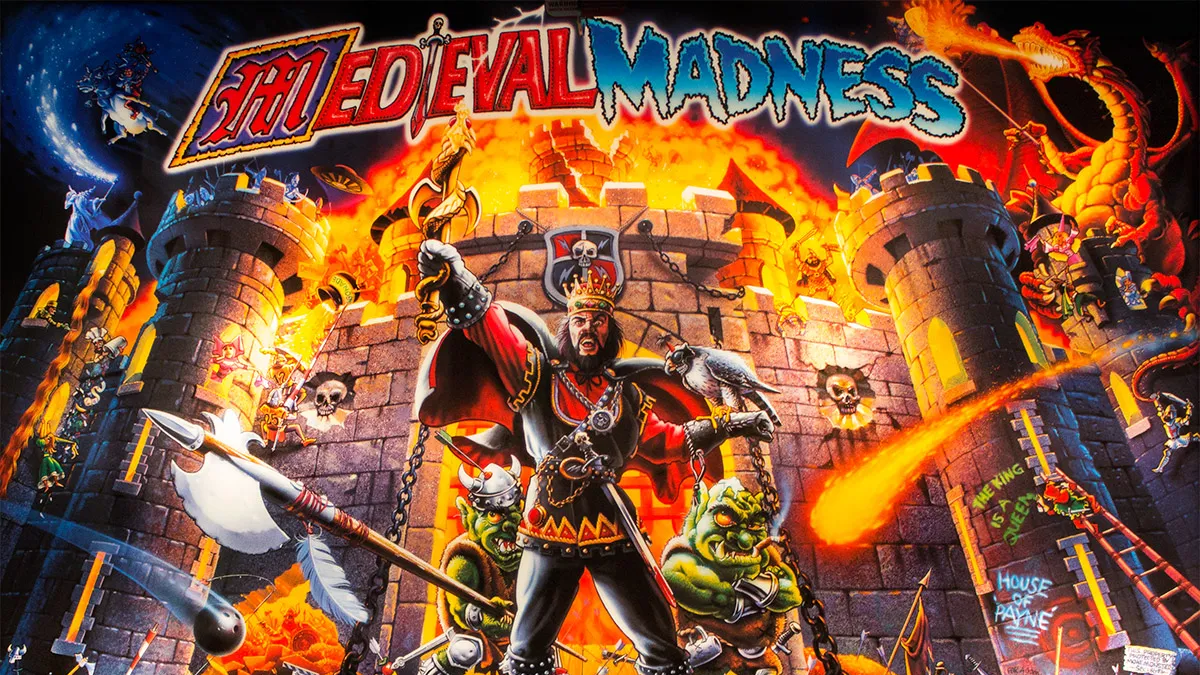
- Medieval Madness released in June 1997 for Williams, and only 4,016 original machines were produced.
- Brian Eddy built the game around one killer idea: an exploding castle that felt fun for new players and still satisfying for experts.
- Lyman Sheats, Dan Forden, Greg Freres, and John Youssi helped turn that simple pitch into a machine with real depth, sharp comedy, and a distinct identity.
- Its legend only grew after Williams left pinball in 1999, and Chicago Gaming’s remake runs proved the game’s appeal was never just nostalgia.
This post helps pinball fans understand the history of Medieval Madness by explaining how it was designed, released, and revived, so they can see why it still matters nearly three decades later.
If you ask pinball people to name the game that feels closest to a universal favorite, Medieval Madness comes up fast. The history of Medieval Madness is not just the story of a strong 1997 Williams release. It is the story of a machine that arrived late in the classic Williams era, sold in relatively modest numbers, and then kept gaining status long after its original production run ended.
That is part of what makes it so interesting. Plenty of machines are loved. Fewer turn into a benchmark. Medieval Madness did that because the pitch was instantly clear, the execution was unusually disciplined, and the personality never felt bolted on. You shoot a castle, the castle blows up, and somehow that simple idea becomes one of the most complete packages in pinball.
Medieval Madness Arrived at the End of an Era
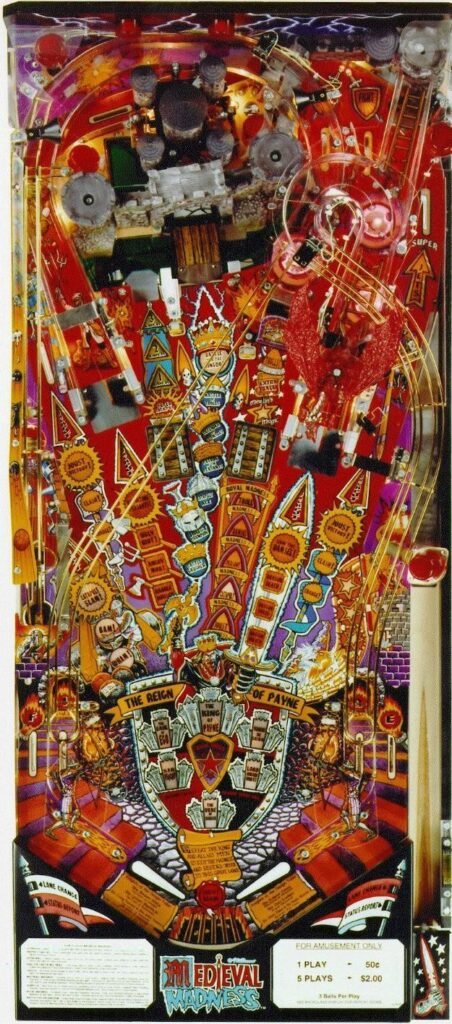
Medieval Madness shipped in June 1997 on Williams’ WPC-95 platform. Brian Eddy designed it, Lyman Sheats handled the software, Greg Freres and John Youssi shaped the art, and Dan Forden built the sound and music package. The original production run landed at 4,016 units, which is healthy enough to matter but small enough to create real scarcity later.
The timing matters. Medieval Madness showed up when Williams was still capable of making deep, toy-heavy, personality-driven pinball, but the broader market was already shrinking. Brian Eddy later said pinball was in a downturn by then and operators were reluctant to buy new games. Two years later, WMS shut down its pinball division entirely. So Medieval Madness now reads like both a high point and a late point. It is one of the clearest “end of an era” games in the hobby.
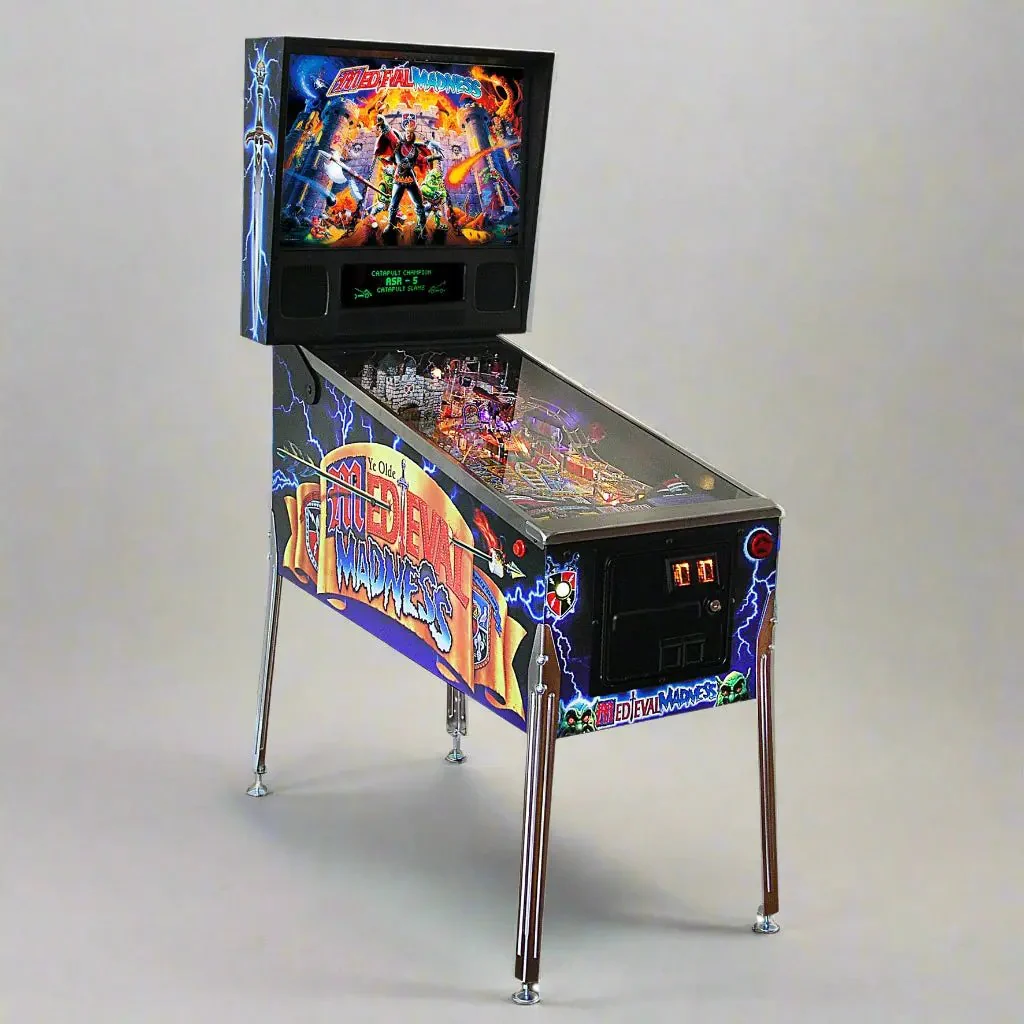
And yet, the machine hit right away. By October 1997, it had climbed to the top of Play Meter’s equipment poll. That tells you a lot. This was not some slow-burn cult game that only collectors discovered later. It worked on location too.
Brian Eddy Built the Game Around the Castle
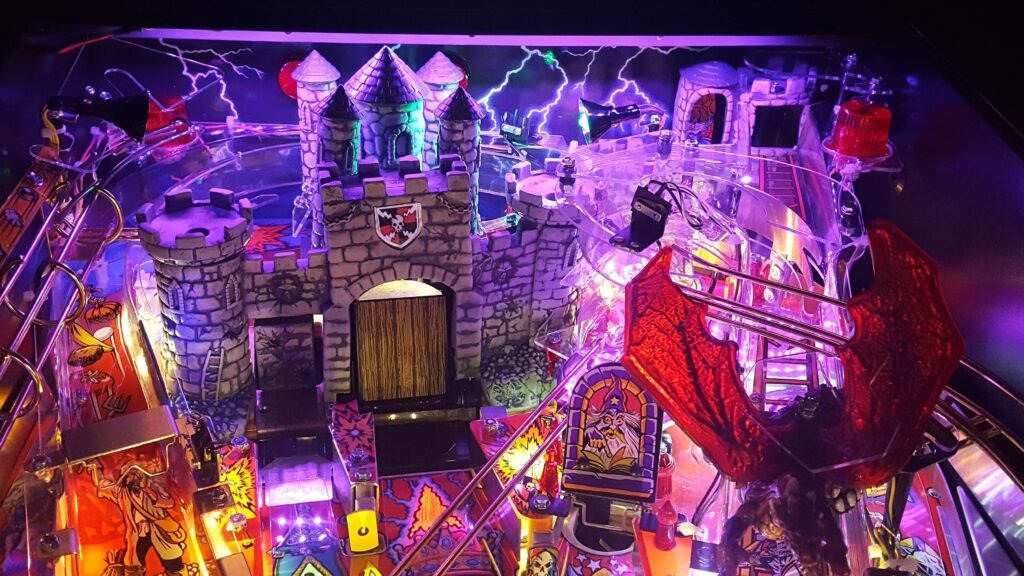
The center of Medieval Madness is obvious the second you see it. It is the castle. Not a castle theme. Not a background castle. A castle that acts like the whole machine’s emotional center.
At Pinball Expo, Eddy described the exploding castle as its own little world inside the game. Everything else had to wrap around it, both above and below the playfield. That design choice explains a lot about why Medieval Madness feels so clean. The game knows what it is about. The castle is not one feature among many. It is the anchor.
That clarity did not make the design easy. The castle mech was tight, expensive, and difficult to fit. Eddy also had to fight a constant budget battle. He talked about having roughly $1,400 total to work with, with just over $200 left for the playfield after standard costs. One of the best little stories from the game’s development is that choosing a launch button instead of a traditional plunger saved $5, which helped make room for the dragon. That is peak 1990s pinball design. Tiny tradeoffs turned into visible toys.
He also came up with the split ramp design to reduce brutal center drains on failed ramp shots. That sounds like a small technical detail, but it matters to how the game feels. Medieval Madness is exciting without feeling cheap. It wants you back for another game, not away from the machine in frustration.
Lyman Sheats Turned a Simple Hook Into a Great Ruleset
A lot of famous machines have a big toy. Not all of them have rules that keep up. Medieval Madness does.
Lyman Sheats had already worked with Brian Eddy on Attack From Mars, and he said Medieval Madness grew from that foundation. He saw it as an evolution, not a copy. People still compare the two games, and the fan layout overlap is real, but the intent was different. Medieval Madness pushed harder on entertainment value, flow, and the sense that every major shot was feeding a bigger story.
One smart change was how the game handled the central toy during multiball. Sheats specifically pointed out that Medieval Madness made it possible to keep hammering the castle during multiball, which gave the centerpiece more staying power than Attack From Mars’ saucer did in similar situations. That is a design lesson as much as a rules lesson: if you build a mech everyone loves, keep it relevant.
There were also features that never made the final game. Sheats mentioned a discarded Trojan rabbit gag for the King of Payne battle, which tells you how deep the team’s theme work went. They were not just filling out modes. They were building a comic world and then trimming from abundance.
I think that is one reason the game aged so well. The rules are approachable, but they do not feel thin. New players understand the goal quickly. Better players keep finding structure underneath the joke.
The Humor, Voices, and Art Made It Feel Alive
Medieval Madness would not be Medieval Madness without the comedy. Strip that out, and you still have a very good castle bash game. But you do not have the machine people still quote.
Dan Forden was blunt about the tone at Pinball Expo. He said the game was basically Monty Python and the Holy Grail, which gave the team plenty to riff on. The speech package leaned into that hard. Forden brought in performers from Chicago’s Second City because the internal team knew they needed people who could actually write and deliver funny lines. That decision paid off in a big way.
Scott Adsit voiced multiple characters, Kevin Dorff handled others, and Tina Fey appeared as two princesses plus the cackling old maid. That is one of those pinball facts people bring up because it sounds made up, but it is real and very funny. The sound package is packed with insult comedy, dumb jokes, theatrical fanfare, and just enough chaos to make the machine feel like a live performance.
The art team understood the assignment too. Greg Freres was skeptical of the medieval theme at first and thought it only worked if the treatment stayed humorous. He was right. Medieval Madness does not play the setting straight. The castle is menacing, but the tone is playful. The art gives you goblins, jokes, exaggerated villains, and visual gags instead of generic fantasy seriousness.
That balance matters. Medieval Madness feels broad in the best way. It has enough bite for hobbyists and enough clarity for somebody walking up cold in an arcade.
Scarcity and Timing Turned It Into a Legend
Some games become collector grails because they are rare. Some become grails because they are great. Medieval Madness got both.
The original run of 4,016 machines was not microscopic, but it was limited enough that once demand kept growing, supply had no real chance to catch up. Eddy himself said he was disappointed the game only sold around 4,000 units, especially because it remained popular. At the same Expo session, Larry DeMar said he had pushed management to keep it on the line longer because the game was hot.
That never happened. Williams moved on, the late-1990s market kept sliding, and then the company exited pinball altogether in 1999.
That sequence turned Medieval Madness into something more than a successful Williams title. It became a symbol of what late Bally/Williams pinball could still do when everything clicked. Strong theme integration. Great flow. Memorable mechs. Funny callouts. Clear objectives. Replay value without homework. In a lot of ways, it became the cleanest argument for that whole design philosophy.
The Remakes Proved It Was Not Just Nostalgia
One of the biggest compliments you can pay an older pin is that a remake does not expose it. Medieval Madness passed that test.
Chicago Gaming began the official remake era in 2015, working under license on a project that brought the game back with updated internals. The field-test prototype at Logan Hardware in Chicago reportedly became the top earner in the location over a six-month stretch, which is about as strong a real-world validation as you can ask for. The appeal was still there.
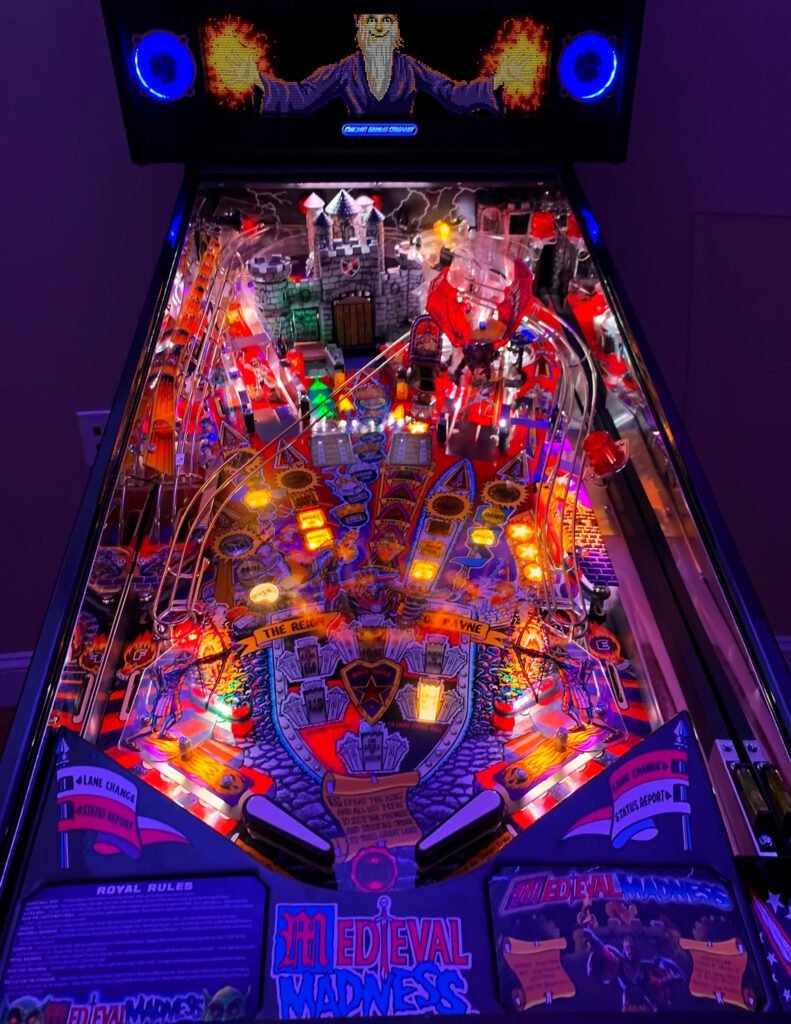
The remake line did more than just preserve the original. It kept expanding. Later versions included the Royal Edition in 2019, and then the Merlin Edition in 2025. Chicago Gaming’s current version adds things like modern electronics, adjustable color display options, LED lighting, and upgraded audio while keeping the core layout and feel intact.
That second life matters to the history of Medieval Madness. It means the game was not only remembered fondly. It was commercially viable enough to come back, again and again, in official form.
The digital afterlife matters too. Zen Studios brought Medieval Madness into Pinball FX3 as part of Williams Pinball Volume 1 in 2018. So even players who never get time on an original or a remake still have a route into the game’s design.
Why the History of Medieval Madness Still Matters
The easiest way to sum it up is this: Medieval Madness is one of the rare pinball machines where the simple explanation and the deeper explanation both work.
The simple explanation is that it has an exploding castle, funny callouts, trolls, a dragon, and great flow. That is enough to understand why people love it.
The deeper explanation is that every department hit. Brian Eddy gave the machine a clear identity. Lyman Sheats made the rules support the mech instead of competing with it. Dan Forden and the voice cast made the game quotable. Greg Freres and John Youssi made sure the art sold the joke without softening the threat. And the bad market timing accidentally helped turn it into a lasting collector legend.
That is why the history of Medieval Madness still matters. It tells you what happens when a pinball machine has a strong core idea and the whole team protects it. Even now, the Medieval Madness family remains near the very top of Pinside’s rankings, which says plenty about how durable that formula has been.
Conclusion
Medieval Madness did not become famous by accident. It was designed with unusual clarity, released at the wrong moment for the business, and then preserved by both scarcity and quality. That combination is hard to fake.
If all you know about the game is that it lets you blow up a castle, that is a good start. But the full history is better than the one-line summary. Medieval Madness is really the story of a late Williams machine that managed to be funny, accessible, mechanically satisfying, and memorable all at once. There are a lot of great pinball machines. There are not many that became shorthand for the hobby itself.
FAQs
Who Designed Medieval Madness?
Brian Eddy designed Medieval Madness, and Lyman F. Sheats Jr. handled the software. The broader team also included Greg Freres and John Youssi on art, plus Dan Forden on sound and music.
How Many Original Medieval Madness Machines Were Made?
The original Williams run was 4,016 machines. That number is a big part of why the game became so sought-after later.
Why Is Medieval Madness So Famous?
Because it combines a very clear main objective, the exploding castle, with strong flow, memorable callouts, funny art, and a ruleset that stays fun well beyond the beginner level. It is easy to understand and still rewarding to master.
Is Medieval Madness Similar to Attack From Mars?
Yes, there is some shared DNA. Brian Eddy and Lyman Sheats both worked on Attack From Mars too, and Medieval Madness grew out of that partnership. But the team also saw Medieval Madness as an evolution, with more emphasis on entertainment value and a different theme identity.
Was Medieval Madness Remade?
Yes. Chicago Gaming launched official remake versions starting in 2015, followed by later editions including the Royal Edition in 2019 and the Merlin Edition in 2025.
Can You Play Medieval Madness Digitally?
Yes. Zen Studios included Medieval Madness in Williams Pinball Volume 1 for Pinball FX3 in 2018.